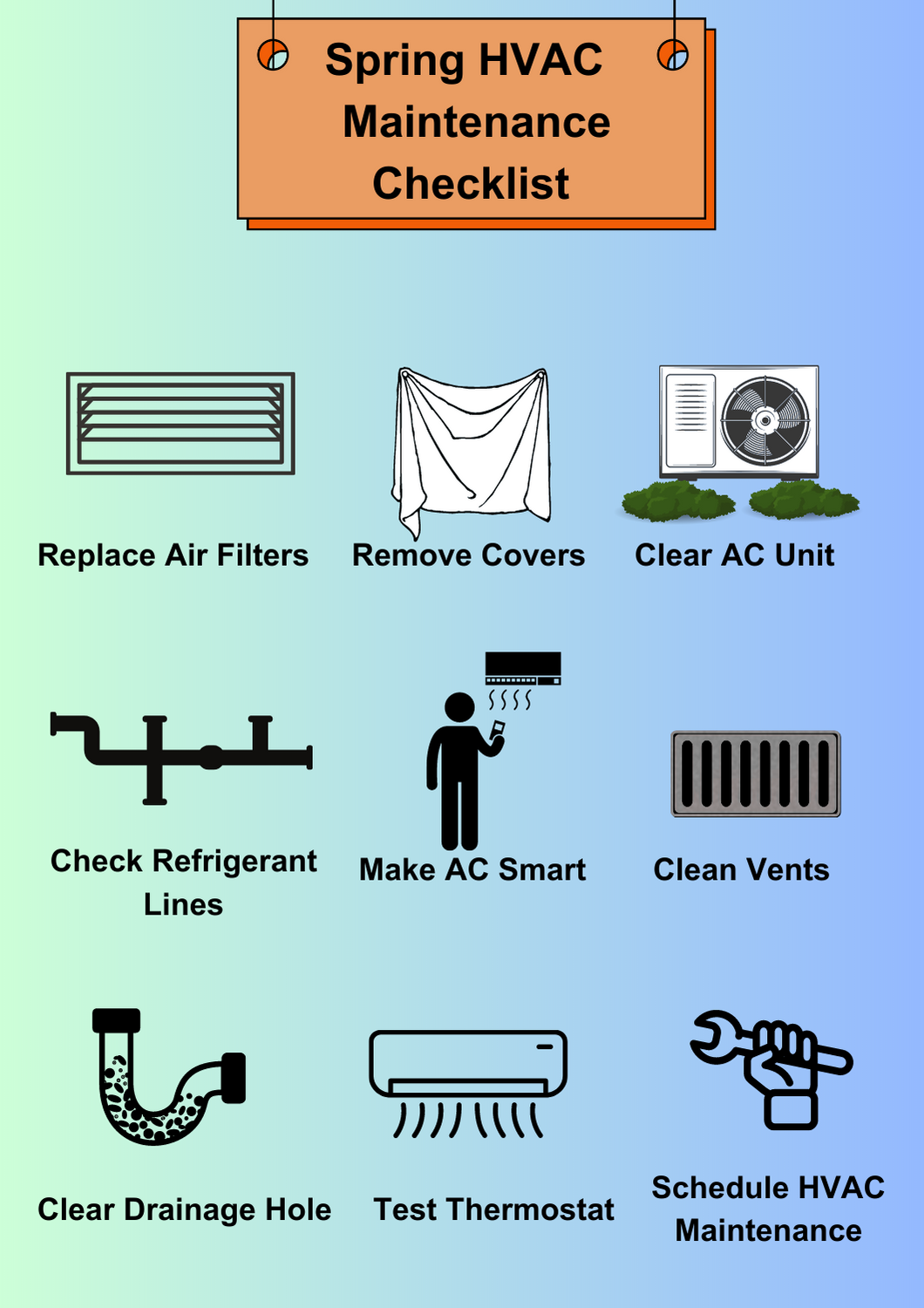
Spring in Andover arrives with warming temperatures, blooming trees, and the quiet realization that summer is only weeks away. For homeowners in Sussex County, that transition is the ideal window to prepare your HVAC system for the months ahead. The five steps in this checklist are not theoretical — they are the specific actions that make a measurable difference in how efficiently your air conditioning system runs, how much you pay to cool your home, and whether your system makes it through summer without a breakdown.
Step 1: Schedule a Professional AC Tune-Up
The professional tune-up is the single most impactful item on this checklist, and it's the one that enables everything else to work properly. A qualified HVAC technician from a company like ASE Heating & Cooling LLC will inspect, clean, and adjust every component of your air conditioning system — tasks that cannot be safely or effectively performed by a homeowner without specialized tools and training.
During a professional tune-up, the technician checks refrigerant levels and corrects any deficiency. Low refrigerant is one of the most common causes of poor cooling performance in Sussex County homes, and it's invisible to the homeowner — the system appears to be running normally, but it's working much harder than it should to produce the same cooling effect. The technician also cleans the condenser coils, which accumulate a full season's worth of dirt, pollen, and debris during the months the system sits dormant. Dirty coils can reduce system efficiency by 20 to 30 percent on their own.
Electrical connections are inspected and tightened. Capacitors and contactors are tested. The condensate drain is cleared. The blower motor is lubricated. The thermostat calibration is verified. Each of these tasks contributes to a system that runs efficiently, reliably, and safely through the summer. Schedule your tune-up in March, April, or May — before the summer rush makes appointments harder to get and wait times longer.
Step 2: Replace Your Air Filter with the Right MERV Rating
Replacing the air filter is the one item on this checklist that every Andover homeowner can handle themselves, and it's one of the highest-impact actions you can take for both system efficiency and indoor air quality. A clogged or low-quality filter restricts airflow, forcing your HVAC system to work harder to move air through the home. That increased effort translates directly into higher energy consumption and accelerated wear on the blower motor and compressor.
For most Andover homes, a MERV 11 pleated filter strikes the right balance between filtration effectiveness and airflow. These filters capture the majority of pollen, mold spores, and fine dust particles that are prevalent in Sussex County during spring and summer, while maintaining sufficient airflow to keep your system running efficiently. If anyone in your household has allergies or asthma, consider upgrading to a MERV 13 filter — but confirm with your HVAC technician that your system's airflow can accommodate the higher resistance.
Install a fresh filter at the start of spring, and then check it again in four to six weeks. During peak pollen season, filters in active households can become saturated quickly. A filter that looks gray or visibly loaded with debris should be replaced immediately, regardless of how recently it was installed. Keeping a supply of the correct filter size on hand makes this easy to do on schedule.
Step 3: Clear and Inspect the Outdoor Condenser Unit
The outdoor condenser unit is where your air conditioning system rejects heat from your home to the outside air. For this process to work efficiently, the unit needs adequate airflow around all sides and a clean set of condenser coils. After a Sussex County winter, the outdoor unit may have accumulated leaves, twigs, seed pods, and other debris both around and inside the unit. Before the cooling season begins, this debris needs to be cleared.
Start by removing any debris that has accumulated around the base of the unit. Trim back any vegetation that has grown within two feet of the unit on any side — shrubs, ornamental grasses, and climbing plants are common culprits in Andover yards. The unit needs at least two feet of clearance on all sides and five feet of clearance above for proper airflow. Restricted airflow around the condenser forces the system to work harder to reject heat, reducing efficiency and stressing the compressor.
Inspect the condenser fins — the thin metal fins that surround the unit. These fins can be bent by debris, hail, or physical contact, and bent fins restrict airflow through the coil. A fin comb, available at HVAC supply stores, can straighten bent fins. However, if the fins are significantly damaged or if you notice refrigerant lines that appear oily or frosted, these are signs that require professional attention. Do not attempt to clean the interior of the unit with a pressure washer — the high pressure can damage the delicate fins and coils. A gentle rinse with a garden hose from the inside out is appropriate for light cleaning, but leave thorough coil cleaning to your HVAC technician during the professional tune-up.
Step 4: Test and Calibrate Your Thermostat
Your thermostat is the control center for your entire HVAC system, and a thermostat that's reading temperatures inaccurately or programmed inefficiently can cost you significantly in energy bills over the course of a Sussex County summer. Spring is the ideal time to test your thermostat, update its programming for the cooling season, and consider whether an upgrade to a smart thermostat would benefit your household.
To test your thermostat, set it to cooling mode and lower the set temperature below the current room temperature. Your AC system should start within a few minutes. If it doesn't respond, check the circuit breaker and the thermostat batteries before calling for service. Once the system starts, verify that the temperature reading on the thermostat matches a separate thermometer placed nearby — a discrepancy of more than a degree or two suggests the thermostat needs recalibration or replacement.
If you're still using a manual thermostat, spring is an excellent time to upgrade to a programmable or smart thermostat. A properly programmed smart thermostat can reduce cooling costs by 10 to 15 percent by automatically adjusting temperatures when you're away or asleep. For Andover homeowners who commute to work or travel regularly during summer, the savings can be substantial. ASE Heating & Cooling can install and configure a smart thermostat as part of a spring tune-up visit — ask about this when you schedule your service call at (973) 479-5148.
Step 5: Inspect Your Ductwork for Leaks and Insulation Issues
Duct leakage is one of the most underappreciated sources of energy waste in Andover homes. The U.S. Department of Energy estimates that the average home loses 20 to 30 percent of the air moving through its duct system to leaks, holes, and poorly connected sections. In a Sussex County home running central air conditioning through a full summer, that represents a significant and entirely preventable waste of energy and money.
You can perform a basic duct inspection yourself by checking accessible duct sections in your basement, crawl space, or attic. Look for sections of ductwork that have separated at joints, visible holes or tears in the duct material, or sections where the insulation wrapping has deteriorated or fallen away. Feel for air movement near duct joints while the system is running — a noticeable draft near a joint indicates a leak. Mastic sealant or metal-backed tape (not standard duct tape, which deteriorates quickly) can seal minor leaks in accessible locations.
For a comprehensive duct assessment, a professional duct inspection and blower door test will identify all leakage points, including those in inaccessible areas. If your home has rooms that are consistently harder to cool than others, or if your energy bills seem disproportionately high relative to your usage, duct leakage is a likely contributing factor. Addressing significant duct leakage can produce energy savings that pay for the repair cost within one to two cooling seasons. Contact ASE Heating & Cooling LLC to schedule a comprehensive HVAC inspection that includes ductwork evaluation for your Andover home.
Frequently Asked Questions About Spring HVAC Maintenance in Andover, NJ
Ready to complete your spring HVAC checklist in Andover? Call ASE Heating & Cooling LLC — your local Sussex County HVAC experts since 1950.
(973) 479-5148 — Call Now